
The Role of Machine Learning in FinTech: From Fraud Detection to Predictive Intelligence
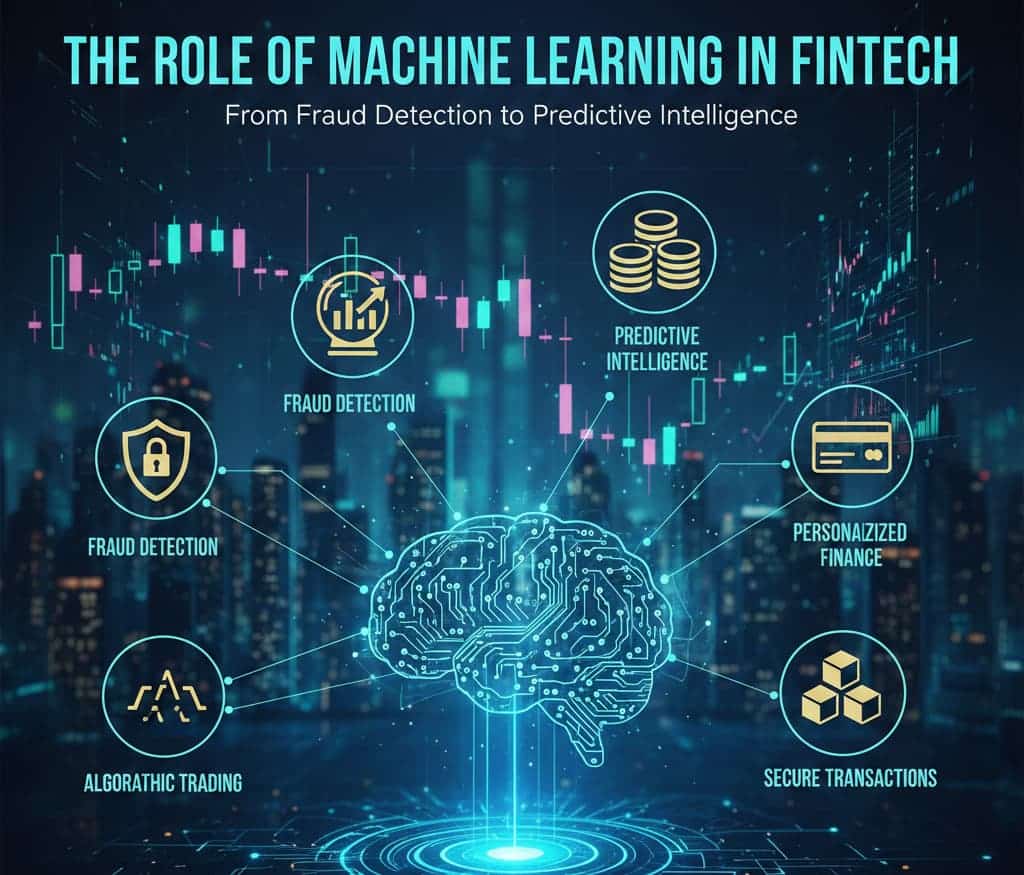
Financial technology has become one of the world’s most data-intensive industries. Digital payments and loan applications and card transactions and portfolio adjustments produce continuous streams of both organized and disorganized data. The existing systems which depend on static rules to process data cannot handle the task of extracting valuable information from large data sets. Machine learning (ML) serves as the essential technology that underpins all contemporary FinTech systems.
As financial ecosystems grow more complex and compliance expectations tighten, many institutions rely on advanced fintech solutions software development services to embed machine learning directly into transaction processing, risk analysis, and regulatory workflows. The finance industry now uses machine learning (ML) technology as its standard operational framework.
This article examines how machine learning technology drives innovation in FinTech by demonstrating its measurable effects and presenting the challenges that organizations must solve to implement machine learning (ML) in their operational systems.
Why Machine Learning Became Critical for FinTech
Financial institutions operate in environments defined by scale and risk. Payment gateways and digital banks and trading platforms and lending systems process millions of transactions every minute. Traditional systems operate on fixed logical rules which create action Y when condition X happens. The model works well under stable conditions but stops functioning when fraud patterns start to change and users change their behavior. Machine learning studies all of its data to develop automatic system adjustments based on discovered patterns.
The Bank for International Settlements reports that financial systems around the world now use advanced analytics and machine learning to develop credit markets and stop fraud and assess risks.
ML systems provide multiple benefits which include:
- Real-time anomaly detection
- Adaptive fraud prevention
- Enhanced predictive modeling capabilities
- Automated compliance monitoring
The system allows businesses to make decisions through its automatic decision-making process which requires no manual rule updates. The financial sector benefits from machine learning because it can learn from fresh data without limits.
Fraud Detection and Transaction Monitoring
The detection of fraudulent activities stands as the most developed application of machine learning technology within the FinTech industry. The traditional fraud detection systems use predetermined limits to determine fraudulent activities which include maximum transaction amounts and specific geographical restrictions. The methods used for fraud detection need to adapt to the changing patterns of fraudulent activities which attackers use to launch their attacks. Attackers distribute transactions across accounts, mask device fingerprints, and exploit behavioral gaps.
The machine learning models conduct evaluations of multiple variables at the same time. The models measure transaction velocity and spending consistency and device and IP behavior and location anomalies and account activity history. Through its ability to analyze correlations in extensive data sets, machine learning systems identify small deviations that escape detection from traditional rule-based systems.
The system decreases false-positive results as an extra advantage to its users. The excessive fraud prevention systems create obstacles for legitimate business operations which irritate clients. The machine learning system achieves better accuracy when it retrains itself using actual fraud information. The digital finance system requires a secure environment which maintains user satisfaction.
Credit Risk Modeling and Lending Intelligence
Machine learning brings about fundamental changes to the process of credit scoring. The traditional credit models depend on a small selection of past data which includes income records and repayment history between 2001 and 2022. The machine learning models use a wider range of behavioral indicators which include transaction reliability and digital activity patterns and current financial transactions.
The system allows organizations to accomplish three main objectives which include delivering faster loan evaluations and better loan applicant classification and developing changing interest rate systems and using new risk assessment methods to extend credit to more customers. The machine learning system for risk evaluation develops better results because it can respond to economic changes which happen in the real world. The models need to learn new financial behavior patterns through retraining because the existing assumptions become less valid during market shifts.
The need for explainability exists as an ongoing requirement although lenders must use automated systems for decision-making according to regulatory standards. Automated decision-making systems require lenders to provide explanations for their choices according to regulatory requirements. The financial industry requires machine learning systems to have complete interpretability functions and precise decision-making documentation.
Personalized Financial Services
Contemporary financial technology platforms employ machine learning technology to create personalized experiences for their customers. The application of machine learning technology enables the delivery of:
- Customized savings recommendations
- Optimizing investment portfolio management
- Forecasting future spending patterns
- Providing product suggestions based on user behavior
Wealth management uses machine learning technology to study past market trends together with current market conditions for portfolio management. Adaptive systems respond faster to market volatility than traditional quantitative models.
Customer engagement grows through personalized experiences which result in higher lifetime customer value. The transformation of fintech applications into financial assistants occurs through their evolution from basic transaction platforms to intelligent financial management tools.
Automation of Back-Office Operations
The banking industry uses machine learning to support its internal operations which exceed its customer service needs. Financial organizations need to manage their operational tasks which include document handling and compliance checks and transaction processing. The automation system powered by machine learning includes five essential functions which include intelligent document extraction and automated KYC validation and transaction classification and suspicious activity flagging and smart case routing.
The system enables organizations to decrease their operating expenses while they gain faster processing times and more precise results. Financial institutions benefit from machine learning-based automation because it enables them to expand their operations at a faster rate without needing to increase their staff numbers.
Data Governance, Security, and Compliance
The implementation of ML technology in FinTech presents challenges which require organizations to establish complete regulatory control. Financial data exists in separate databases which include core banking systems, payment processing systems, CRM applications, and trading platforms. The quality of data establishes the performance level of machine learning technologies.
Before deploying ML models, institutions must:
- Normalize and clean datasets
- Eliminate bias
- Implement strong encryption protocols
- Establish access control policies
The system requires ongoing monitoring to identify model performance changes. Security is non-negotiable. ML systems process highly sensitive data, and breaches carry severe financial and reputational consequences.
Model governance frameworks must ensure:
- Transparent decision-making
- Continuous retraining
- Bias monitoring
- Audit trail documentation
ML systems create new risks which existing safeguards fail to control.
Emerging Trends: The Next Phase of ML in FinTech
The role of machine learning in FinTech continues to expand.
The new developments include:
- Real-time AML monitoring agents
- Behavioral financial health scoring
- AI copilots for compliance teams
- Predictive liquidity management
- Anomaly detection in crypto ecosystems
Machine learning functions as the intelligent decision system that operates fundamental financial systems because financial products are transitioning to digital formats.
The next generation of financial services will emerge through the combination of big data analytics and cloud computing and machine learning technologies.
Conclusion
Machine learning serves as the essential technology which drives current FinTech operations. The technology boosts fraud detection capabilities while enhancing credit risk assessment models and providing personalized services and streamlining intricate business processes.
The process of successfully implementing machine learning systems requires organizations to possess more than just data science competencies. Organizations must establish safe systems operate under legal requirements while using models that provide understandable results and conducting ongoing system assessments.
Financial systems achieve their most effective performance through responsible implementation of machine learning as it becomes a permanent foundation that operates at scale.
The growth of digital finance will increase the use of machine learning which will transform institutional processes for risk management customer service delivery and competitive strategies in data-driven business environments.
Related Posts

What Is Enterprise Mobility Management and Why It Matters
March 25, 2026The workplace has changed dramatically. Employees now expect to work from anywhere, ...

7 Best Knowledge Management Systems for Enterprise Organizations
March 14, 2026Enterprise organizations generate enormous amounts of information every day. Product documentation, internal ...

5 Best Bitnami Images Alternatives for 2026
March 10, 2026Container images have become a foundational element of modern software delivery. In ...

Top 5 Virtual Hands-on Labs Solutions in 2026
March 6, 2026Virtual hands-on labs have become a critical component of how organizations train ...

How to Create a FinTech App in 2026: Types, Requirements & Development Process
February 26, 2026The FinTech industry has moved from its experimental phase to its current ...