
Accelerate AI Innovation with Data Annotation Services
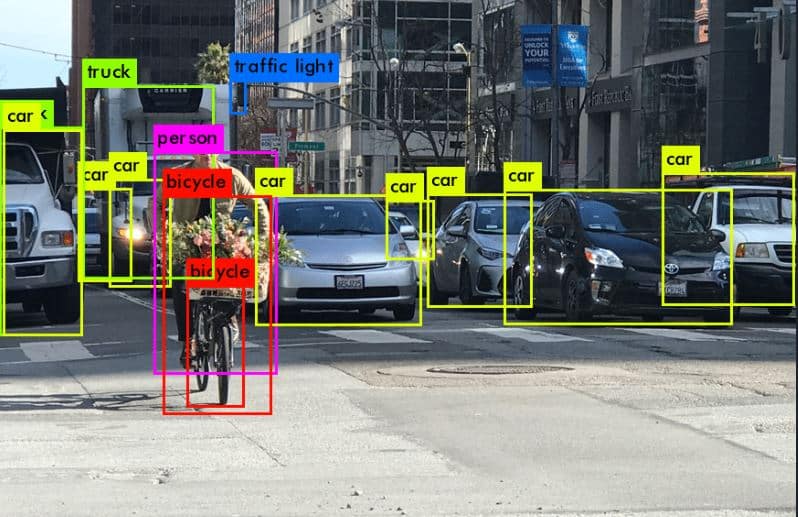
What’s the biggest bottleneck in AI development? Often, it’s getting enough quality training data that is labelled correctly. Data annotation services eliminate this bottleneck by handling data labelling professionally and quickly. AI teams stop waiting for data and start innovating with AI models that work since training data is properly prepared.
Data from 2025 reveals that companies with high-quality training datasets experience 20–30% higher accuracy across enterprise AI models. Capitalizing on the gains, it’s crucial to understand why annotation approaches slow or accelerate innovation and how data annotation powers AI breakthroughs across industries. At the same time, it’s imperative to explore key AI use cases enabled by high-quality annotation.
Why Does Data Annotation Slow AI Innovation Without the Right Approach?
Data annotation problems often stay hidden until the AI model fails. Explore how not having the right approach creates delays, repeats work, and prevents AI models from improving as fast as teams expect.
1. Wrong Labels Confuse AI Learning
When labels are not correct, the model interprets the wrong meaning from the data. This leads to poor results and forces teams to rework the same dataset many times, slowing down progress and increasing effort.
Wrong labels also hide real problems inside the data. Teams may think the AI model is failing, while the real issue lies in basic labeling mistakes that were never fixed during the early stages.
2. Slow Manual Work Delays Projects
If teams label data step by step without proper planning, progress becomes slow. AI projects wait for weeks just to get usable data, which delays testing, feedback, and real-world deployment.
Manual delays also affect planning. Product launches get pushed back, and teams lose chances to improve their tools early. This makes AI growth uneven and harder to manage over time.
3. No Clear Rules for Labelers
Without fixed rules, data labelers may tag the same data in different ways. This creates mixed signals for AI models and makes learning unstable, even if large volumes of data are used.
Such gaps increase confusion during training. Teams spend extra time fixing errors instead of building features, which reduces confidence in results and slows down further improvements.
4. Poor Handling of Rare Cases
If rare cases are skipped during data labeling, AI fails in practical use. Things like low-light images or unclear speech remain unmarked, making AI weak in actual environments.
These missed cases appear later as bugs. Fixing them after launch takes more time than handling them early, increasing costs and slowing down future updates.
5. No Focus on Data Quality Checks
Without proper review, errors pass through unnoticed. Small mistakes add up and reduce AI accuracy, which forces repeated corrections across multiple project stages.
Quality gaps make it hard to trust results. Teams argue over outputs instead of moving forward, slowing innovation and making AI models less useful for real needs.
6. Scaling too Fast Without Support
Hurried scaling without expert help leads to rushed labels. Projects quickly grow in size, but labeling quality drops, which harms AI learning instead of improving it.
Some data annotation companies highlight this risk, but teams ignore it. Without balance between speed and clarity, growth creates more problems than progress.
What Are the Strategic Advantages of Data Annotation Services for Driving AI Innovation?
Strong data annotation support brings structure and clarity to AI learning. Explore how professional annotation services improve speed, accuracy, and the ability to scale AI projects with confidence.
1. Domain-Specific Expert Accuracy
Best data annotation companies employ specialists with medical, legal, financial, or engineering backgrounds who understand complex subject matter beyond general data labelers. A radiologist annotating medical scans provides far more accurate labels than someone without medical training. Expert annotation services create AI models that work in specialized professional fields reliably.
- Medical experts label healthcare imaging data
- Legal professionals annotate contract documents accurately
- Financial analysts tag transaction fraud patterns
- Engineers mark manufacturing defect types correctly
- Scientists categorize research data with precision
2. Quality Assurance Through Multi-Layer Review
Professional annotation services implement verification processes where multiple annotators label the same data independently, then experts reconcile disagreements. This multi-person review catches mistakes that individual annotators might miss. Higher-quality training data directly translates to more accurate AI predictions in production environments.
- Multiple annotators label identical data samples
- Supervisors review flagged disagreements between annotators
- Quality scores measure individual annotator accuracy
- Random sampling audits catch systematic errors
- Automated checks validate annotation consistency rules
3. Scalable Workforce for Rapid Deployment
Data annotation companies maintain large teams that can start labeling thousands of items within days, versus months needed for hiring internal staff. When AI projects need 100,000 labeled images urgently, professional annotation services mobilize teams immediately. Quick scaling accelerates AI development timelines significantly compared to building annotation teams from scratch.
- Assigns hundreds of annotators within days
- Handles sudden volume spikes without delays
- Reduces project timelines from months to weeks
- Operates across multiple time zones continuously
- Maintains backup annotators for a consistent workflow
4. Specialized Annotation Tool Infrastructure
Professional annotators use advanced software designed specifically for different data types. These specialized tools enable faster, more accurate labeling than basic drawing programs. Tool sophistication directly impacts annotation speed and precision for complex AI projects.
- Uses medical imaging annotation software DICOM-compatible
- Employs LiDAR point cloud labeling tools
- Provides video frame sequence annotation platforms
- Offers audio waveform transcription interfaces optimized
- Maintains polygon and semantic segmentation tools
5. Consistent Annotation Guidelines and Standards
A data annotation company develops detailed rulebooks, defining exactly how to label ambiguous situations consistently across thousands of annotators. Clear guidelines prevent confusion that creates inconsistent labels that confuse AI models during training.
- Creates detailed labeling instructions per project
- Defines edge case handling procedures clearly
- Standardizes terminology across all annotators globally
- Provides visual examples for ambiguous scenarios
- Updates guidelines based on emerging patterns
6. Active Learning Integration
Professional annotation services identify which unlabeled data points would most improve AI model accuracy if labeled next. Instead of randomly labeling data, they focus on examples where the AI currently performs poorly. This targeted approach improves models faster using fewer labeled examples overall.
- Identifies data samples that confuse current models
- Prioritizes labeling uncertain predictions first
- Reduces the total annotation volume needed significantly
- Iteratively improves model accuracy between batches
- Focuses effort on the highest-impact data points
7. Cross-Cultural and Multilingual Capabilities
Global annotation teams provide native speakers with labeling text, speech, and cultural context across dozens of languages and regions. AI serving international markets needs training data reflecting different cultures, dialects, and contexts. Professional annotation services provide access to diverse annotators that internal teams cannot easily replicate.
- Provides native speakers for multiple languages
- Understands cultural context in content moderation
- Labels regional dialects and accents accurately
- Recognizes culturally-specific visual elements correctly
- Validates translations and localization quality thoroughly
8. Data Security and Compliance Management
Annotation services implement strict security protocols protecting sensitive customer data during labeling, including encryption, access controls, and compliance certifications. Medical, financial, and personal data require HIPAA, GDPR, or other regulatory compliance during annotation. Professional annotation services handle compliance burdens that companies struggle to manage internally.
- Maintains HIPAA compliance for medical data
- Follows GDPR requirements for European information
- Implements SOC 2 security controls strictly
- Uses encrypted data transfer and storage
- Conducts background checks on all annotators
9. Continuous Annotator Training Programs
Professional teams train annotators regularly on evolving AI requirements, new annotation techniques, and emerging data types. As AI technology advances, annotation methods must adapt correspondingly. Ongoing training ensures that annotator skills match current AI innovation needs rather than using outdated approaches.
- Trains annotators on new AI frameworks
- Updates skills for emerging data types
- Teaches the latest annotation methodology improvements regularly
- Provides feedback to improve individual annotator performance
- Shares the best practices across global teams
10. Cost Efficiency Through Specialization
Professional annotation companies achieve economies of scale by spreading tool costs, infrastructure, and management overhead across many clients. Building internal annotation teams requires hiring, training, management, and tool investments that professional services have already optimized. Outsourcing data annotation typically costs significantly less than developing equivalent internal capabilities.
- Spreads software licensing costs across clients
- Amortizes training investments over large teams
- Reduces management overhead per project substantially
- Eliminates idle capacity during slow periods
- Provides predictable per-item pricing structures clearly
What Are the Key AI Use Cases Powered by High‑Quality Data Annotation?
AI works best when data reflects real situations clearly. Explore how high‑quality data annotation helps AI handle real inputs and deliver steady outcomes across use cases.
| AI Use Case | Role of Data Annotation | Outcome Achieved |
| Autonomous Vehicles | Pixel-perfect object detection in images | Reliable navigation Safer decision-making |
| Medical Diagnostics | Precise organ/tumor boundary labeling | Accurate disease detection Faster diagnoses |
| Sentiment Analysis | Granular emotion tagging in text | Authentic customer insights Targeted engagement |
| Fraud Detection | Contextual anomaly flagging in transactions | Proactive risk mitigation Secure operations |
| Facial Recognition | Diverse demographic landmark annotation | Inclusive accuracy Bias elimination |
| Speech Recognition | Phonetic and contextual utterance labeling | Natural conversations Multilingual fluency |
Summing Up
Organizations embracing professional annotation services gain innovation advantages. Those resisting experts help struggle with delays and quality issues. AI development has matured beyond DIY annotation approaches. Competitive AI innovation demands professional annotation services that deliver speed and quality simultaneously without compromise.
Author bio: Peter Leo is a Senior Consultant at Damco Solutions specializing in strategic partnerships and business growth. With deep expertise in forging high-impact collaborations, he helps organizations drive revenue, expand into new markets, and build lasting value. Known for a data-driven approach and strong relationship management skills, Peter delivers tailored strategies that align with business goals and unlock new opportunities.
Related Posts

Data Engineering for BFSI: Building Audit-Ready Data Pipelines
October 1, 2026In banking, insurance, and lending, a correct number is not enough. Regulators, ...
Top 5 Data Platform Development Companies Across the World
August 25, 2025In a world increasingly driven by data, organizations must rely on robust, ...

10 Best Big Data Development Firms for Enterprises
August 20, 2025In the modern enterprise landscape, data is not just an asset—it’s the ...

Top IoT Analytics Firms Combining Big Data, AI & Edge Computing
August 14, 2025The Internet of Things (IoT) continues to revolutionize industries by connecting devices, ...

Overcoming Data Project Failures: Proven Lessons from Agile Offshore Teams
July 18, 2025Big data programs are notorious for their low success rates. A NewVantage ...