
The 10 Commandments of Successful CX Implementation: Lessons From Enterprise Transformations
Organizations spend millions on customer relationship management (CRM), field service, artificial intelligence (AI), enterprise resource planning (ERP), customer portals, and automation platforms to improve customer experience (CX). Unfortunately, technology alone rarely delivers the intended results. Companies that consistently deliver exceptional customer experiences don’t succeed because they purchase better technology. They succeed because they execute transformation differently.
Customers experience processes, not applications. For example, a client initially feels good after reporting a failed automated teller machine (ATM) and quickly receiving a service appointment. But that initial positive feeling disappears if the technician arrives without the correct part. Clients don’t care whether the CRM and scheduling systems work perfectly if the result is an ATM that still isn’t working properly. That gap between digital intelligence and operational execution is where many large transformation programs struggle.
Large-scale transformations typically experience the same patterns across industries ranging from ATM manufacturing and service to high-tech manufacturing and utilities. That is because service outcomes depend on many factors and not just on the customer-facing application. Those factors include scheduling, technician skills, inventory availability, asset information integration reliability, and frontline adoption. No matter the industry or the constraints faced, the underlying CX challenge always remains the same: connecting enterprise decisions to the actual moment when the customer experiences the service. By following the 10 commandments of successful CX implementation, organizations can steer clear of the common pitfalls that derail many CX initiatives while improving loyalty and operational efficiency and strengthening long-term resilience (Figure 1).
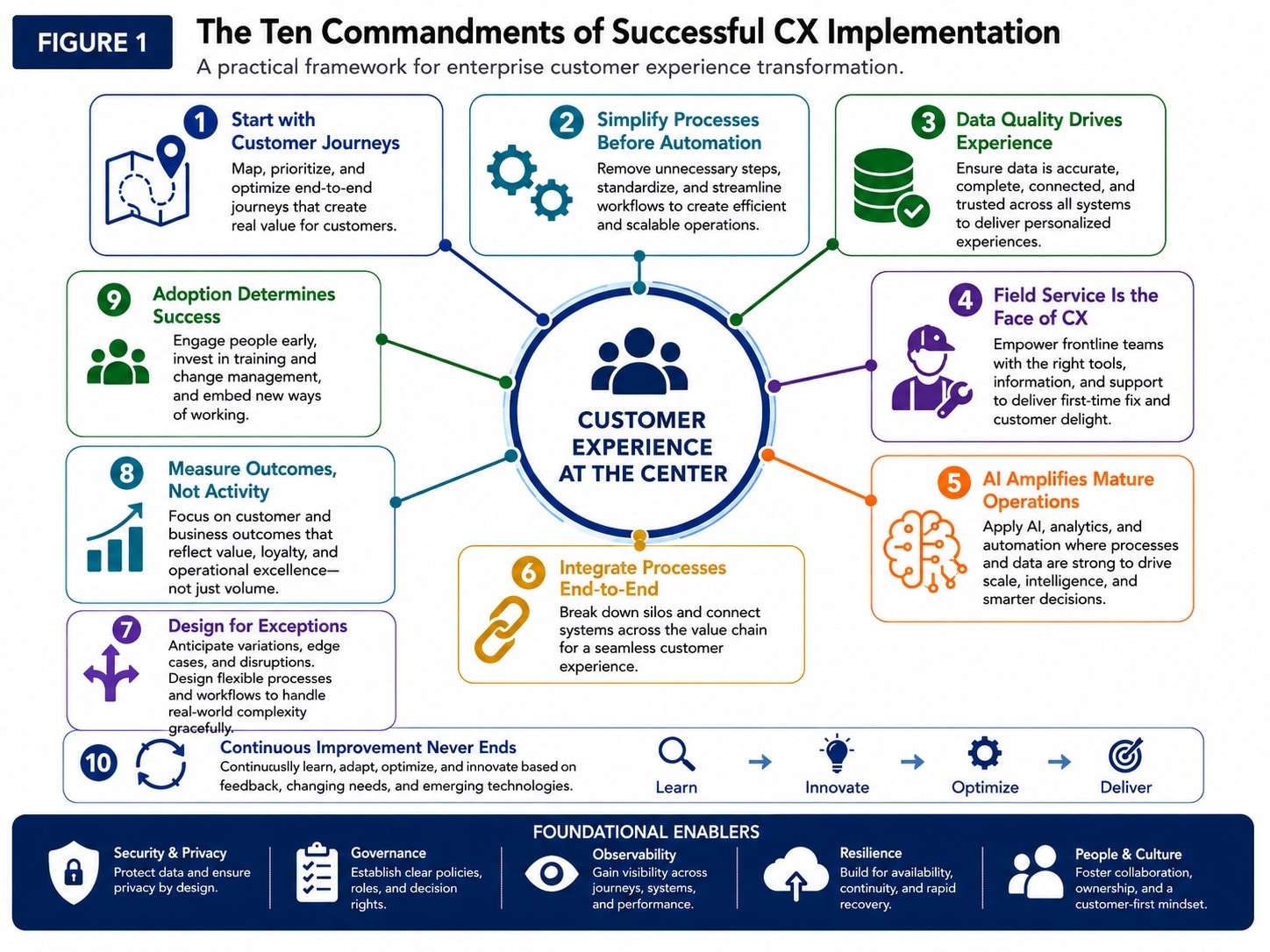
Figure 1. The 10 commandments of CX implementation. Image courtesy of Abhishek Sharma.
Treat CX as an enterprise transformation
Organizations can no longer afford to think of CX as the responsibility of one department. Customer experience is created by a variety of departments ranging from sales and service to supply chain, inventory, logistics, billing, engineering, IT, and frontline employees. Operationally, this change in view requires breaking down functional silos. Culturally, it means encouraging teams to consider the entire customer journey instead of optimizing only their own departmental metric.
Another essential change for organizations to make is to move away from the idea that implementation ends at go-live. Some of the best improvements emerge only after production data reveals how customers, technicians, dispatchers, and systems behave. In fact, the feedback received in the first two weeks after launch from all user groups, including technicians, dispatchers, customer managers, account managers, and call center agents, is critical. It’s vital for the implementation team to carefully review the feedback and resolve the issues raised by these various user groups to improve the overall customer experience.
The 10 commandments of CX implementation
Organizations require permanent mechanisms for feedback, analysis, optimization, and controlled experimentation. These are the 10 commandments of successful CX implementation in the current business environment.
- Commandment 1: Begin with customer journeys. Map every interaction, including sales, service, installation, maintenance, and returns. Include escalations, renewals, billing, invoicing, and costing in this assessment. Every technological decision needs to support these journeys and not the other way around. For example, a utility customer reporting an outage cares about restoration time, not whether SAP, Oracle, Salesforce, a geographic information system (GIS), an order management system (OMS), and Fusion Field Service exchanged messages successfully.
- Commandment 2: Address processes before configuration. Configuration cannot fix broken processes. If a business transforms a 12-step manual process into a 12-step automated process, nothing has improved. A more effective solution is to simplify and standardize processes before automating them.
- Commandment 3: Data quality directly affects CX. Customers never see a company’s master data, but they experience its consequences. Wrong addresses, duplicate customers, missing warranties, duplicate work orders, and incorrect assets, spare parts, invoices, and cost accounting can all negatively impact customers. Poor data becomes poor CX. Begin data governance months before implementation.
- Commandment 4: Field service shapes CX. Many organizations focus entirely on CRM and neglect what customers remember: Did the technicians arrive? Did they fix it? Did they have the right part? Were they knowledgeable? Was communication proactive? CRM records promises while field service fulfills them (Figure 2).
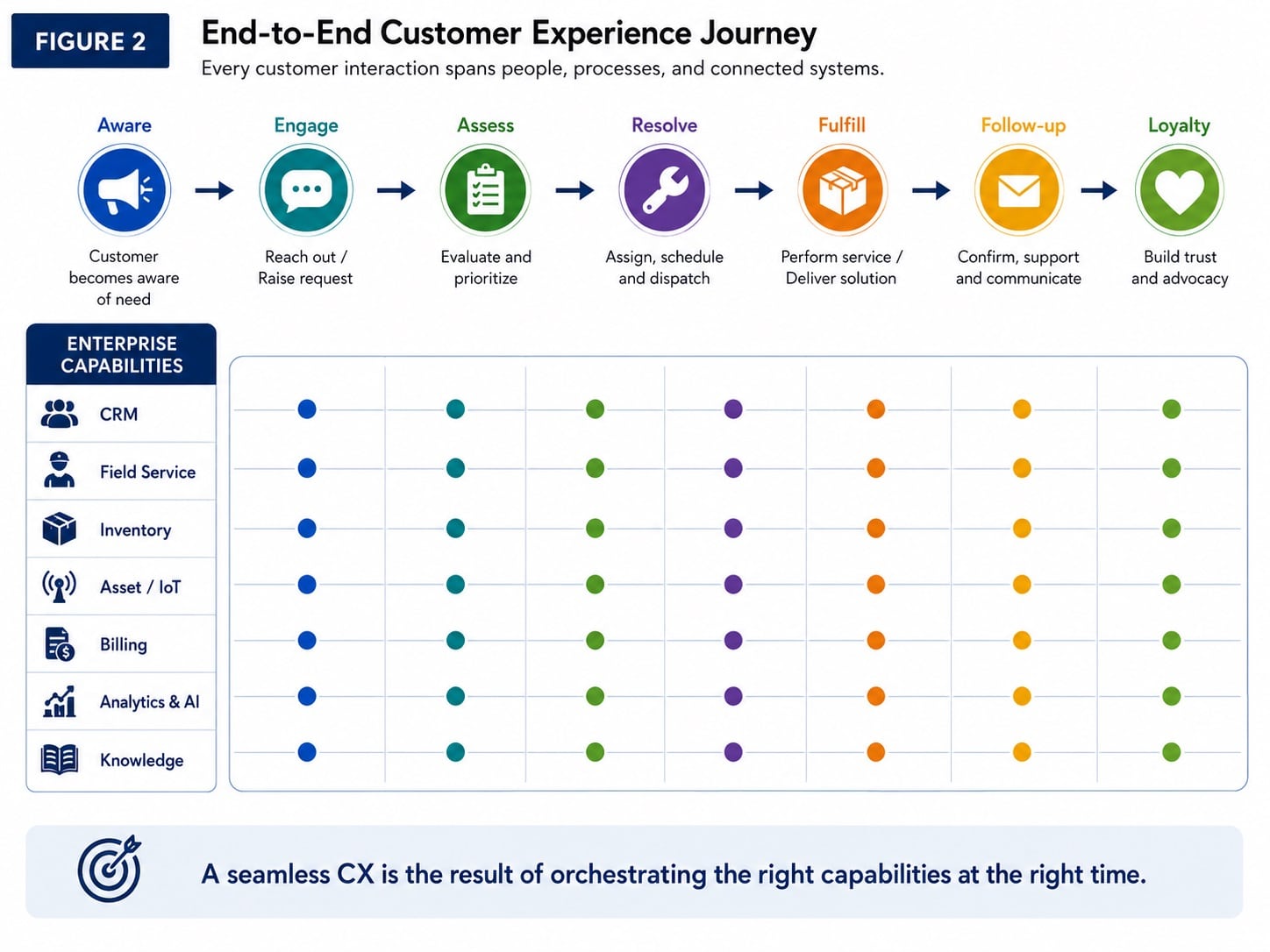
Figure 2. End-to-end customer journey. Image courtesy of Abhishek Sharma.
- Commandment 5: AI cannot rescue broken operations. AI predicts and operations deliver, but AI amplifies mature processes rather than replacing them. Operational discipline becomes more important as AI becomes more autonomous. Automation can simply cause the wrong decision to be executed faster if asset data is inaccurate or inventory visibility is incomplete. Likewise, poorly defined business rules can also lead to poor decisions that negatively impact the bottom line. Predictive maintenance has little value if the technician or the correct inventory isn’t available when needed.
- Commandment 6: Integrate processes, not just systems. Many companies celebrate integration projects too soon. They proudly announce, “We integrated our CRM, ERP, and field service platforms,” but they fail to understand that technical connectivity alone does not create a seamless customer experience. Success only occurs when full process integration is achieved. Organizations need to determine whether a service request can automatically trigger a full process of actions, such as inventory reservations, scheduling, technician assignments, customer notifications, invoicing, and warranty validation. This is true process integration (Figure 3).
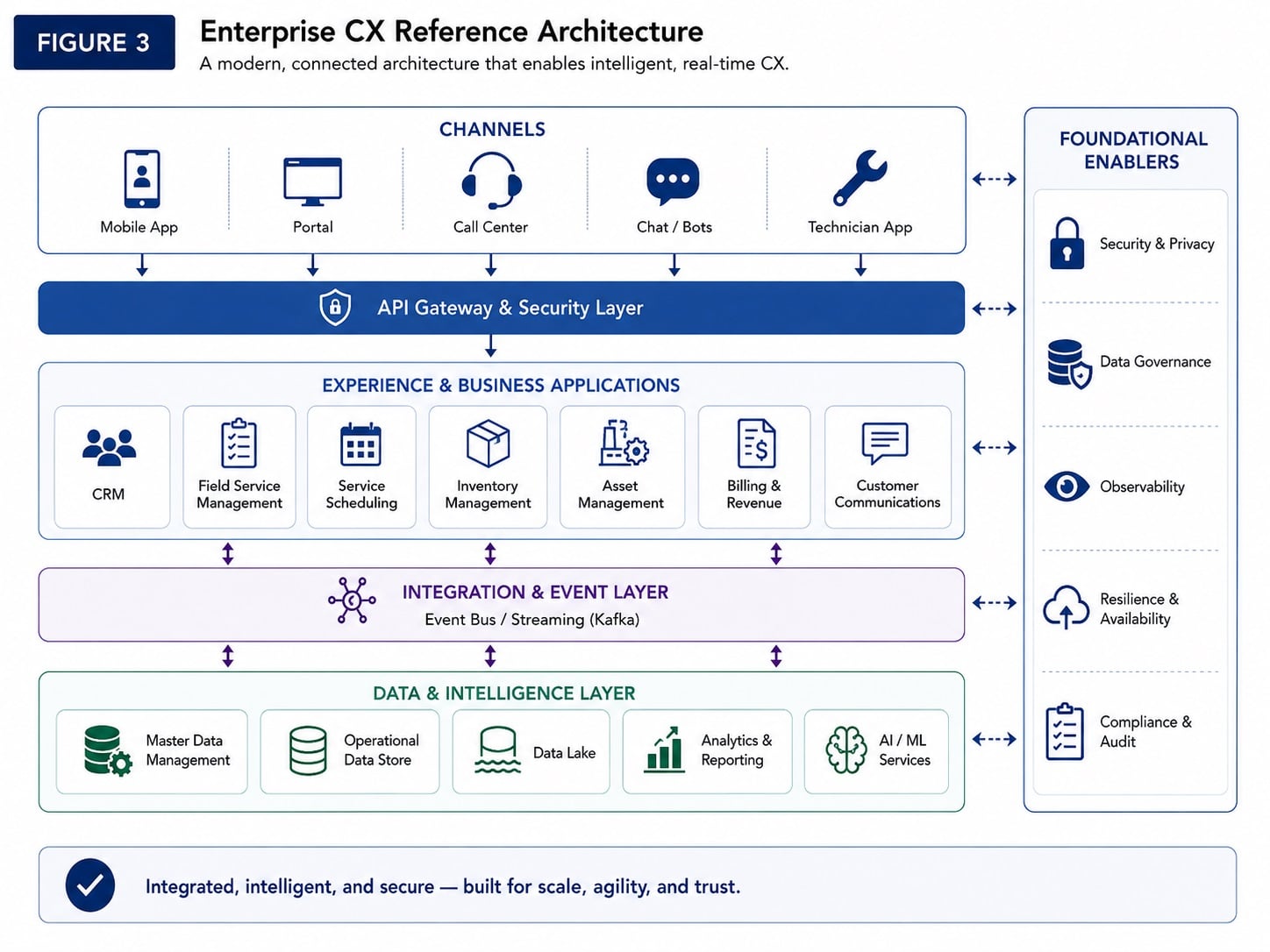
Figure 3. Enterprise CX reference architecture. Image courtesy of Abhishek Sharma.
- Commandment 7: Design for exceptions. Real businesses operate on exceptions. It’s vital to ask not only how this process works, but also what happens when it doesn’t. That means not being afraid to ask what happens if the part is unavailable, if the customer cancels after the technician starts traveling, if an emergency job comes in, if the technician loses connectivity, or if the work requires two technicians or a specialized certification. Designing for exceptions is designing for reality.
- Commandment 8: Measure outcomes, not activity. Many dashboards proudly report statistics on the number of tickets created, work orders closed, or calls answered. These do not necessarily improve customer experience (Figure 4). Better metrics include first-time fix rate, customer effort score, and mean time to restore. Schedule adherence, technician productivity, repeat visits, and net promoter score are additional key performance indicators (KPIs). It’s crucial not to evaluate operational metrics in isolation, as their value stems from understanding how they influence customer outcomes and, ultimately, business performance.
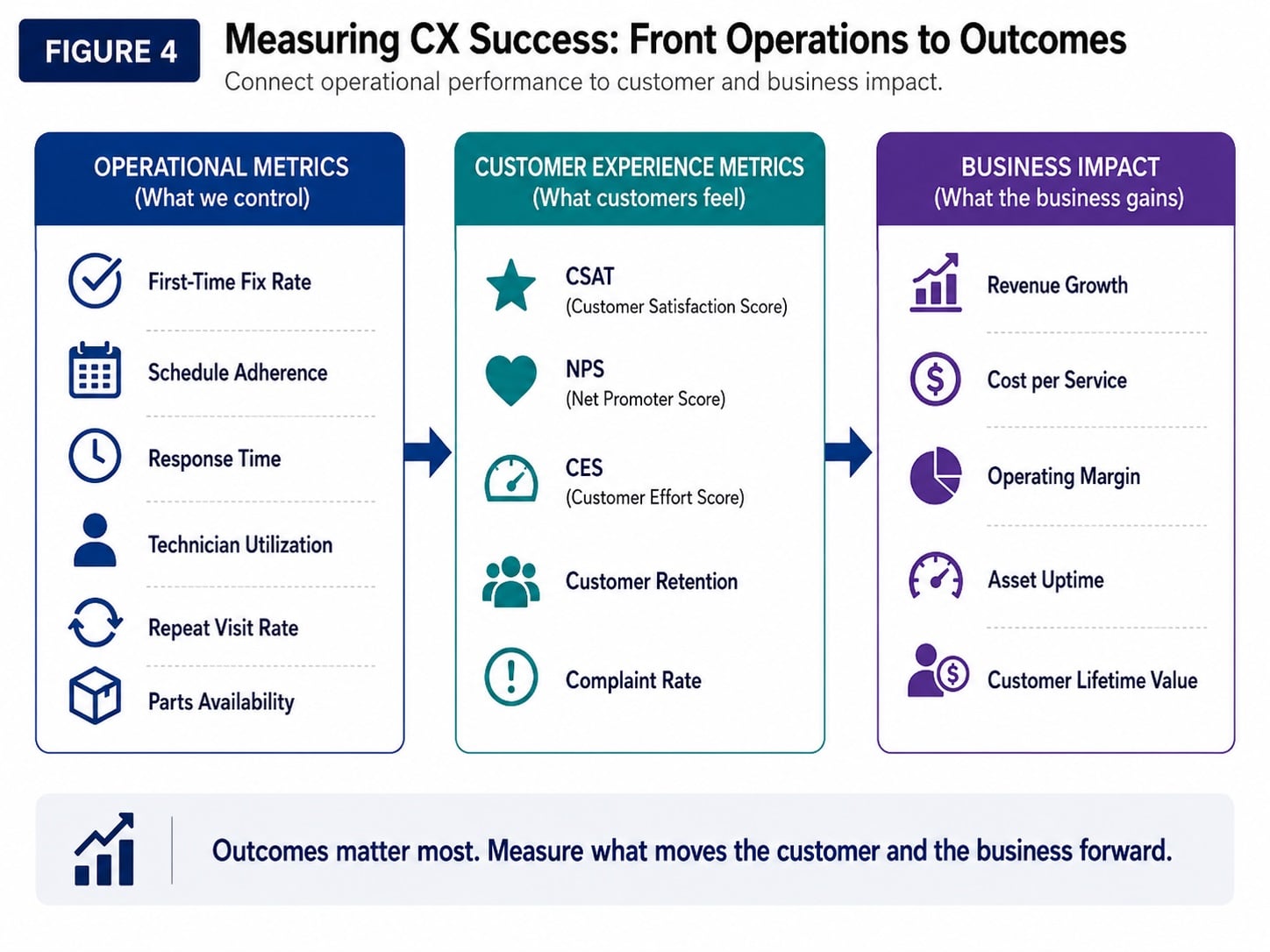
Figure 4. Measuring CX success: front operations to outcomes. Image courtesy of Abhishek Sharma.
- Commandment 9: Adoption determines success. Projects often celebrate “go-live day,” but customers judge the project six months later. Successful transformations invest heavily in the launch process, as well as training, change management, leadership sponsorship, and continuous coaching. These elements, along with super-user communities, feedback loops, and adoption rates, create lasting value and promote long-term success.
- Commandment 10: Continuous improvement never ends. The best organizations never consider implementations complete. They continuously seek to evaluate and improve by monitoring customer feedback, scheduling performance, and AI recommendations. These companies also track inventory optimization and technician productivity and break down any bottlenecks that form. Customer expectations evolve constantly, and it’s critical for a company’s CX platform to keep pace.
These 10 commandments provide organizations with a practical framework for connecting technology investments with the operational capabilities that shape CX. Their value, however, depends on how well business, operations, and technology teams align around shared outcomes and success metrics.
Connect technology to customer outcomes
Successfully executing the 10 commandments of CX implementation within an organization requires a shared definition of success that spans all involved departments. Business teams can’t just focus on customer satisfaction. Operations teams can’t focus only on productivity and service-level agreement (SLA) performance. Technology teams can’t solely be concerned with system availability, integrations, and releases. The goals of these teams need to connect.
For example, if quick restoration of service is the desired customer outcome, include operational measures such as first-time fix rate, travel time, schedule adherence, and part availability. This outcome may also include technological capabilities like accurate asset data, real-time inventory visibility, intelligent scheduling, event-driven integrations, and mobile enablement. When a company can trace a technology capability to an operational result and then to a customer outcome, true alignment emerges. That traceability creates accountability across the organization and helps keep CX initiatives focused on essential outcomes.
CX transformation is not simply a software implementation. It ultimately reflects all the strengths and weaknesses of the processes, systems, data, and people behind it. Organizations that treat go-live as the beginning and then continue to measure, learn, and adapt can improve not just CX but also strengthen operational performance and build long-term customer loyalty. That’s why successful CX transformation depends on consistently translating technology capability into operational performance and operational performance into customer outcomes.

About the Author: Abhishek Sharma is an enterprise transformation leader, program manager, and solution architect with more than 18 years of experience leading complex customer experience, CRM, field service, and business transformation initiatives. His expertise includes enterprise architecture, service operations, scheduling and optimization, intelligent automation, AI, predictive analytics, and digital twins. He has received multiple corporate recognitions for thought leadership and program excellence and contributes to the technology community through professional publications, peer review, and judging activities. Connect with Abhishek on LinkedIn.
Related Posts

AI Agent Observability Needs An Action Ledger, Not Just Model Traces
September 9, 2026Companies have learned to log what AI systems say. The next challenge ...

Why Human Judgment Is Essential in AI-Powered Financial Controls
September 1, 2026Artificial intelligence (AI) can review vast financial datasets, identify unusual transactions, and ...

What to Expect From LLM Customization Services
August 22, 2026LLM Customization services help organizations adapt language-model applications to specific business tasks, ...

The New Z library Official Domain Gives Users A Different Way To Access The Site
August 14, 2026The arrival of a new Z library official domain changes the way ...

The 9 Best Agentic SDLC Platforms for Engineering Teams in 2026
August 5, 2026Ask most AI development tools to do something, and they wait for ...
Leave a Reply